
Conditions with pulmonary fibrosis
Many conditions can be associated with pulmonary fibrosis. Here we discuss some of the more common ones.

Sjögren's syndrome with ILD
Sjögren’s syndrome is a rare autoimmune disease that primarily affects the salivary and tear glands. It can also affect the lungs. As Sjögren's syndrome is rare, it is often overlooked or misdiagnosed due to its common symptoms of dry mouth, dry eyes, fatigue, and chronic pain.1,2
Some facts about Sjögren's include:
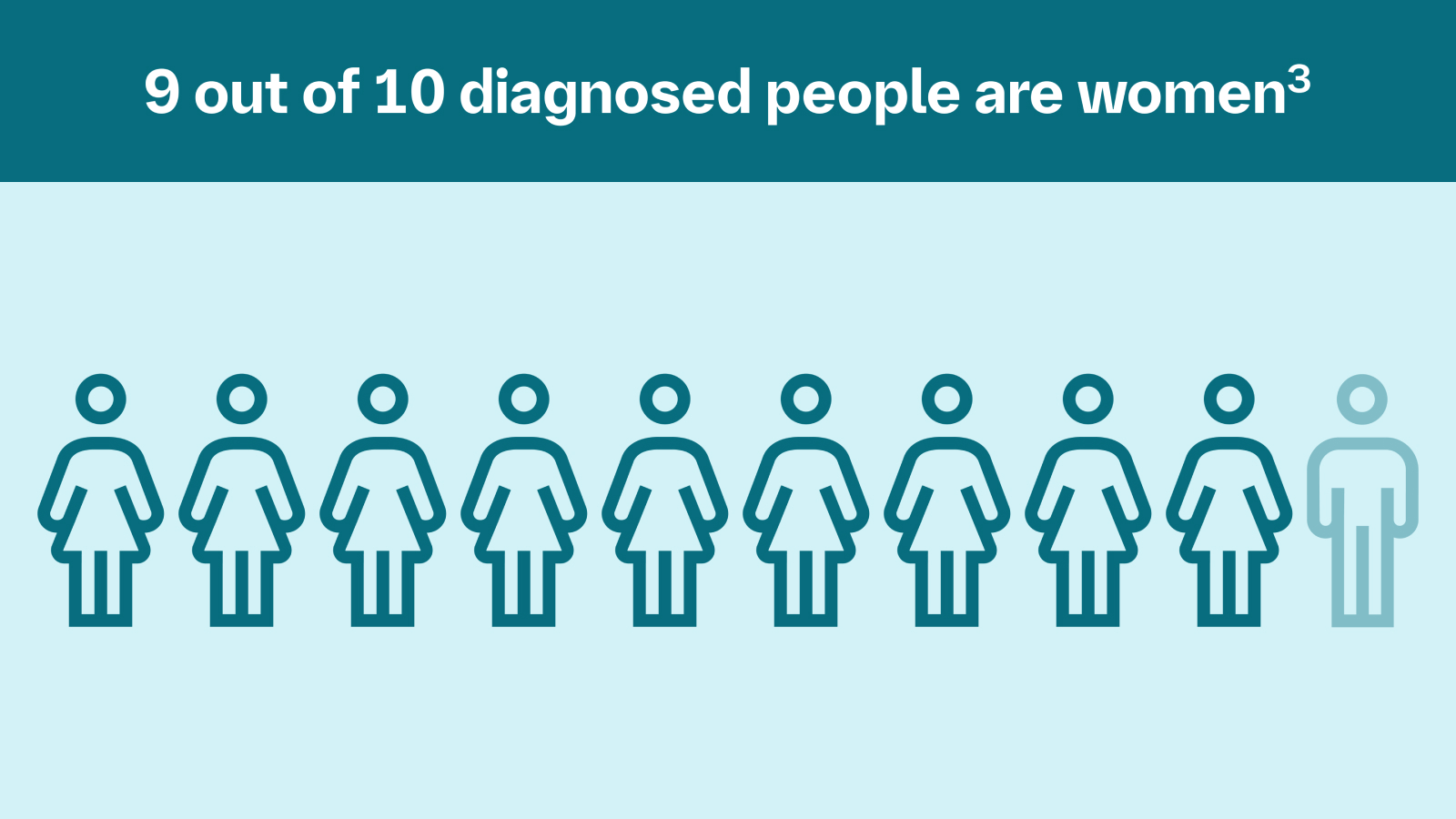
Sjögren's syndrome is classified as either primary (when the condition develops by itself) or secondary (when it develops with another autoimmune disease like rheumatoid arthritis, lupus, or scleroderma).2 And while many of the people diagnosed with Sjögren's syndrome are women, it can still occur in people of all genders, races, and ages.3
What is Sjögren’s syndrome with interstitial lung disease (ILD)?
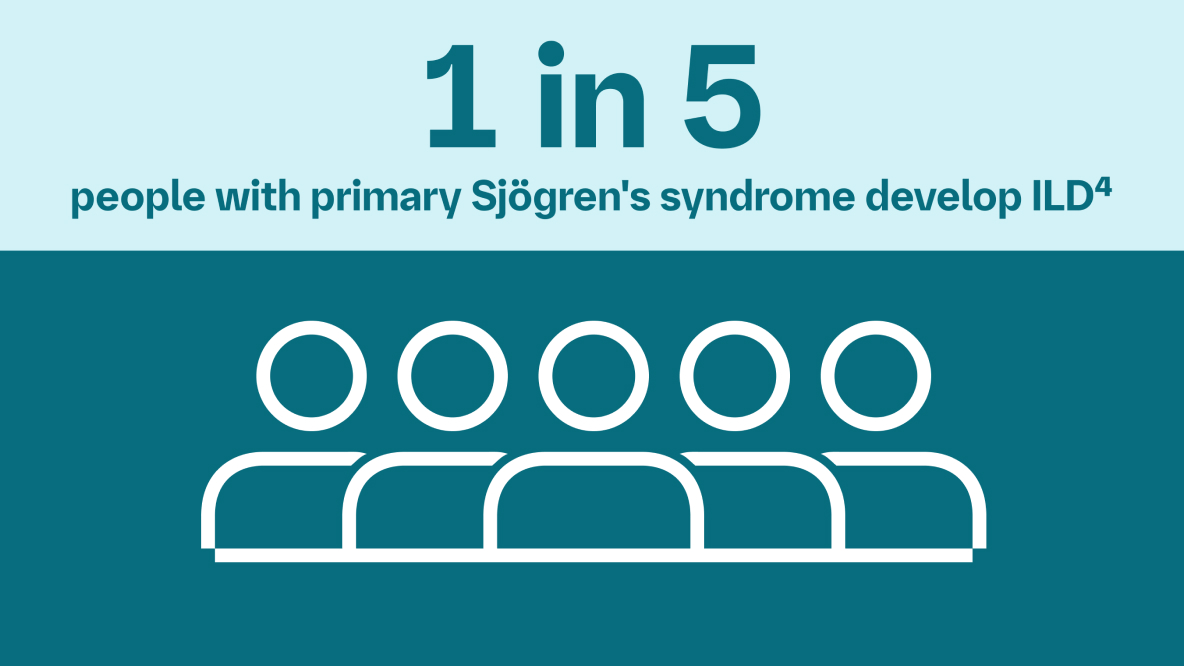
One in 5 people with primary Sjögren’s syndrome develop interstitial lung disease. A person with Sjögren's syndrome with ILD might develop lung scarring, or pulmonary fibrosis, making it harder to breathe.4

Symptoms of Sjögren's syndrome with ILD
The earlier lung involvement is spotted, the sooner you can be tested and get support from your doctor.4
Most people don’t notice the changes to their lungs at first and may think they’re becoming unfit or tired. This can be true but it’s important to always be aware of your body’s capabilities and notice any changes.4
There are a variety of symptoms you may experience with Sjögren’s syndrome with ILD and some of these can worsen as your disease progresses. Keep in mind that there are lifestyle changes and different treatments that can help you manage them. Symptoms can also vary from one person to another, so your symptoms may not be the same as somebody else's who is living with pulmonary fibrosis.5
Symptoms of Sjögren’s syndrome with ILD may include5,6:



These symptoms are not exclusive to ILD and can be found in other respiratory or cardiovascular diseases.
Quick tip
Keep a record of any symptoms you may have been experiencing. This symptom tracker can help you to stay organised.
Diagnosing Sjögren’s syndrome with ILD
When diagnosing Sjögren's syndrome with ILD, your treatment team will:



If you are diagnosed with Sjögren’s syndrome with ILD, your care team will work together to agree on the optimal treatment pathway with you. The earlier you start treatment, the better chance you give yourself to manage ILD, which can be a serious complication in Sjögren’s syndrome.4
Risk factors for ILD
If you have Sjögren’s syndrome, you may be wondering if you could also have ILD, or be at risk of developing it, since 1 in 5 people with primary Sjögren’s syndrome develop ILD.4
If you are worried about your risk for ILD, ask your doctor for a lung examination. Current guidelines recommend that if your doctor suspects that you may have Sjögren’s syndrome with ILD, you should undergo lung function tests to help determine the health of your lungs and decide on the next steps.8 It’s important that your doctor checks your lung health regularly so that any changes can be managed quickly.
Risk factors for Sjögren's syndrome
Only 6 people per 100,000 each year develop Sjögren’s syndrome, with about 9% to 20% of these people developing ILD.5,8
Most people with ILD will not have Sjögren’s syndrome, since it’s a rare disease. However, if you have any concerns, it’s always best to make an appointment to discuss these with your doctor. The earlier you take action, the sooner you can get the right support from your healthcare team.4

Progression of Sjögren's syndrome with ILD
Sjögren’s syndrome with ILD can be progressive, which means that, over time, symptoms and how well your lungs work might get worse, or that an HRCT scan has detected that pulmonary fibrosis in the lungs has increased. However, there is currently no way of predicting if, or how fast, this will happen. Some people might not have any changes in their symptoms, while others might experience a faster worsening of their symptoms. It is not known why some people’s disease progresses faster than others.4
Treatment depends on the symptoms and severity of your condition.4 Ask your doctor about your treatment options, including pulmonary rehabilitation, which could help you manage your condition.
Managing life with Sjögren's syndrome with ILD
Receiving a diagnosis of Sjögren's syndrome with ILD can feel lonely and uncertain; at these times, it can feel very difficult to stay positive. Daily life can be challenging, both practically and emotionally. However, there are many strategies to help people living with pulmonary fibrosis.
Abbreviations: CT, computed tomography; GERD, Gastro-oesophageal reflux disease; HRCT, high-resolution computed tomography; ILD, interstitial lung disease; IPF, idiopathic pulmonary fibrosis; PF, pulmonary fibrosis; RA, Rheumatoid arthritis; RA-ILD, rheumatoid arthritis-associated interstitial lung disease.
-
NHS Inform. Sjögren’s syndrome. Updated February 23, 2023. Accessed October 2, 2024. https://www.nhsinform.scot/illnesses-and-conditions/immune-system/sjogrens-syndrome
-
National Health Service. Sjögren’s syndrome. Updated April 21, 2020. Accessed October 2, 2024.https://www.nhs.uk/conditions/sjogrens-syndrome/
-
National Institues of Health; Carsons SE, Patel BC. Sjogren syndrome. Accessed October 2, 2024. https://www.ncbi.nlm.nih.gov/books/NBK431049/
-
Luppi F, Sebastiani M, Silva M, et al. Interstitial lung disease in Sjögren’s syndrome: a clinical review. Clin Exp Rheumatol. 2020;38 Suppl 126(4):291-300.
-
Flament T, Bigot A, Chaigne B, Henique H, Diot E, Marchand-Adam S. Pulmonary manifestations of Sjögren's syndrome. Eur Respir Rev. 2016;25(140):110-123.
-
Luppi F, Sebastiani M, Sverzellati N, et al. Lung complications of Sjorgren syndrome. Eur Respir Rev. 2020;29:200021.
-
Lee AS, Scofield RH, Morland Hammitt K, et al. Consensus Guidelines for Evaluation and Management of Pulmonary Disease in Sjögren’s. Chest. 2021;159(2):683–698.
-
Weng MY, Huang YT, Liu MF, Lu TH. Incidence and mortality of treated primary Sjögren’s syndrome in Taiwan: a population-based study. J Rheumatol. 2011;38(4):706-708.